UBAEC | Electronic Components & Application Insights
  • Components
  • Applications
  • Wiki
    • Submit a Technical Question
  • Technical Topics
  • Industry News
No Result
View All Result
  • MOV
  • MLV Knowledge Map
UBAEC | Electronic Components & Application Insights
  • Components
  • Applications
  • Wiki
    • Submit a Technical Question
  • Technical Topics
  • Industry News
No Result
View All Result
UBAEC | Electronic Components & Application Insights

Vishay Introduces Surface-Mount Y1 Safety Capacitors: Key Design Checks

Viki by Viki
2026-09-07
in Industry Insights
A A
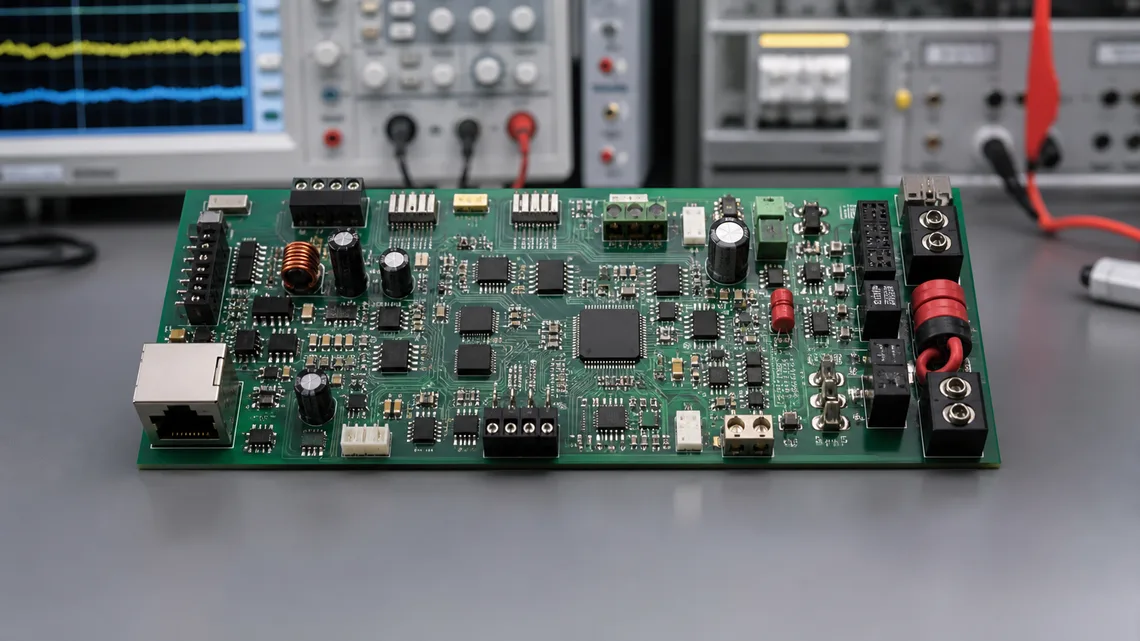
Populated electronic circuit board on a laboratory test bench
Share on FacebookShare on Twitter

Vishay has introduced the BCcomponents SMDY1…S series, a surface-mount ceramic safety-capacitor family with a Y1 rating of 300 V AC and a stated DC rating of 1500 V. The company positions the series for EMI/RFI suppression and filtering where board space and automated assembly are important.

What is new

According to Vishay, the series can reduce board-space requirements by up to 40% compared with its previous-generation devices. The surface-mount casing supports pick-and-place assembly and reflow soldering, avoiding the manual insertion step normally associated with leaded ceramic safety capacitors.

The published range includes 10 pF to 1500 pF values in two case sizes. Vishay states an operating-temperature range of -55 °C to +125 °C and insulation resistance of at least 10,000 MΩ.

Approvals and intended use

The manufacturer states that the parts comply with IEC 60384-14 and carry UL, CSA, VDE, ENEC and CQC certifications. The Y1 classification is intended for applications that may bridge double or reinforced insulation, but designers must still confirm the exact approval file, rated voltage, insulation system and equipment standard for the final product.

Named applications include industrial drives, welding equipment, inverters, UPS systems, rail power supplies, HVAC equipment, LED drivers, switch-mode power supplies, appliances and charging equipment.

What engineers should verify

  • Whether the circuit position requires Y1, Y2, X1 or another safety classification.
  • The applicable AC and DC voltage limits for the exact part number.
  • Capacitance, tolerance, dielectric characteristic and expected change with temperature and voltage.
  • Creepage, clearance and insulation requirements at board and equipment level.
  • Reflow profile, mechanical stress, cleaning process and production inspection.
  • The exact certification file and whether it covers the intended market and application.

Why this is not a simple MLCC replacement

A safety capacitor is selected by more than capacitance and package size. Its certified construction, insulation role, failure behavior and application position matter. A surface-mount format does not remove the need to evaluate creepage, clearance, pollution degree and the equipment’s safety standard.

Reference: Vishay SMDY1…S product release, 2026-08-11

Next Post
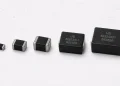
Multilayer varistors in several chip sizes with black glass-ceramic bodies and silver end terminations

TDK Introduces High-Surge Multilayer Varistors: Ratings and Selection Limits

Metal oxide varistor with a thermocouple on a temperature test fixture

How Should MOV Temperature Derating Be Applied?

  • Trending
  • Comments
  • Latest
Blue radial metal-oxide varistors used for transient overvoltage protection

What Is a Varistor? MOV Basics and Key Parameters

2026-09-07
Populated electronic circuit board on a laboratory test bench

What Are Electronic Components? Common Types, Functions and Selection Basics

2026-09-07
Conceptual MLV operating regions from normal leakage through transient conduction to post-pulse recovery

How Multilayer Varistors Work

2026-09-07
IEC 61000-4-5 combination-wave surge test chain from generator through coupling network to equipment under test

IEC 61000-4-5 Surge Test Explained: Waveforms, Coupling and Interpretation

2026-08-10
Populated electronic circuit board on a laboratory test bench

What Are Electronic Components? Common Types, Functions and Selection Basics

1
Oscilloscope probes measuring surge residual voltage between the protected node and local return after an MOV

Why Do MOV Leads and PCB Traces Increase Residual Voltage?

1
Blue radial metal-oxide varistors used for transient overvoltage protection

What Is a Varistor? MOV Basics and Key Parameters

0
Multilayer chip varistors and molded surface-mount MOV packages used for circuit protection

What Is an SMD MOV? Types, Parameters and Applications

0
GDT devices with a surge generator and oscilloscope in a circuit-protection test setup

Why Can a GDT Keep Conducting After a Surge?

2026-09-16
Single two-terminal MLCC in a measurement fixture with a completed thermal-history backdrop and a conceptual slow downward time trend

MLCC Aging and De-Aging: Capacitance After Reflow and Referee Time

2026-09-15
Disc MOV on a test fixture with a thermal image and a time-voltage withstand curve

How to Read MOV TOV Data: Temporary Withstand Is Not MCOV

2026-09-14
Three-lead thermally protected MOV connected to a status LED and optocoupler test board

How Should the Third Lead of a Thermally Protected MOV Be Wired?

2026-09-13

Need help selecting a component?

Share the operating voltage, package, surge or ESD conditions. We will help you identify the parameters that matter.

Submit a technical question

About UBAEC

UBAEC provides electronic component information, circuit protection knowledge, application guidance, and inquiry support for engineers and sourcing teams.

Categories

  • Application Notes
  • Automotive
  • Basics
  • Consumer Electronics
  • Cross Reference
  • Downloads
  • Industrial Control
  • Industry Insights
  • LED Lighting
  • Manufacturers
  • MLV
  • Parameters
  • Protection Circuits
  • Selection Guide
  • Standards
  • Technical Q&A
  • Telecommunications

Recent Post

  • Why Can a GDT Keep Conducting After a Surge?
  • MLCC Aging and De-Aging: Capacitance After Reflow and Referee Time
  • About
  • Contact
  • Privacy Policy
  • 中文

© 2026 UBAEC — Electronic Components & Application Insights. All rights reserved.

No Result
View All Result
  • Home
  • Component Center
  • Applications
  • Technical Wiki
  • News
  • Contact

© 2026 UBAEC — Electronic Components & Application Insights. All rights reserved.