

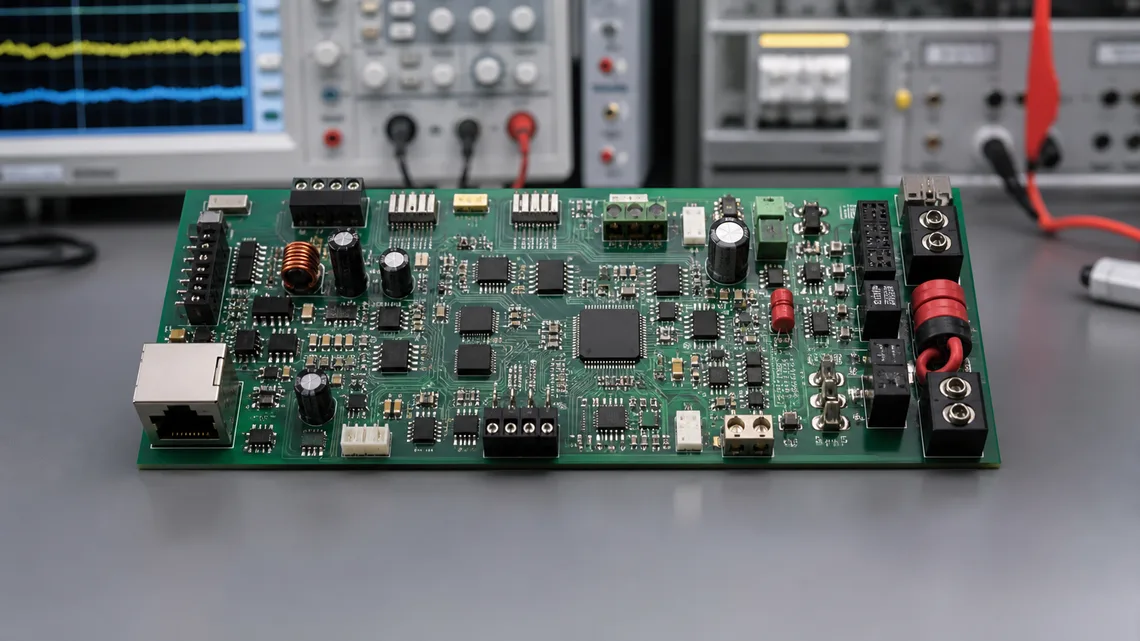
What are electronic components? A simple list might begin with resistors and capacitors and continue through semiconductors, sensors, connectors and functional modules. In real design and sourcing work, however, memorizing names is less useful than understanding what each device does in a circuit and which operating conditions determine whether it is suitable.
This guide provides a practical map of common electronic component types. It combines several classification views—device structure, integration level and circuit function—so the groups are not completely exclusive. A TVS diode, for example, is both a semiconductor device and a circuit-protection component. A temperature sensor may be a discrete sensing element or a complete integrated circuit.
Passive components: resistors, capacitors and magnetics
Resistors limit current, divide voltage, establish bias conditions, sense current and form timing networks. Fixed, precision, current-sense, adjustable, thick-film and thin-film resistors serve different requirements. Resistance is only the first selection value; tolerance, power rating, temperature coefficient, working voltage, pulse capability and package size can all determine the result.
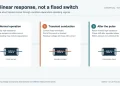
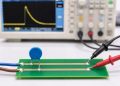
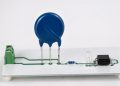
Thermistors, photoresistors and varistors are often discussed within the resistor family, but they exhibit strong sensitivity or nonlinearity. NTC devices may support temperature sensing, compensation or inrush-current limiting. PTC devices may support sensing, overcurrent protection or resettable protection. A varistor is defined by its nonlinear current-voltage behavior and is commonly used for transient overvoltage protection; it should not be treated as an ordinary resistor whose value simply changes. For a complete classification, see Types of Resistors Explained; for the operating-variable and test-condition distinction, continue with Linear vs Nonlinear Resistors.
Capacitors store electric charge and are used for decoupling, filtering, coupling, timing, resonance and energy buffering. Ceramic, aluminum electrolytic, tantalum, film and supercapacitor technologies differ in polarity, capacitance range, equivalent series resistance, frequency behavior and failure mechanisms. Multilayer ceramic capacitors (MLCCs) are widely used, but their effective capacitance can change with DC bias, temperature, frequency and aging.
X and Y capacitors are safety capacitors intended for defined line-to-line or line-to-earth positions. Their voltage class, failure behavior and safety approvals matter; similar capacitance and appearance do not make them interchangeable.
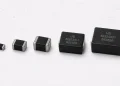
Magnetic components include inductors, ferrite beads, common-mode chokes, differential-mode chokes and transformers. Inductors commonly store energy or filter current, ferrite beads suppress high-frequency noise, common-mode chokes attenuate common-mode interference, and transformers transfer energy, change voltage or provide isolation. Inductance, rated and saturation current, DC resistance, impedance versus frequency, core material, insulation and temperature rise all need attention.
Discrete semiconductors: rectification, switching and power control
The diode family includes rectifier, fast-recovery, Schottky, Zener, light-emitting and transient-voltage-suppression (TVS) diodes. Although all depend on semiconductor junction behavior, they differ substantially in forward voltage, reverse rating, recovery time, junction capacitance, dissipation and surge performance.
Bipolar junction transistors (BJTs), MOSFETs, insulated-gate bipolar transistors (IGBTs) and thyristors are used for signal amplification, electronic switching and power control. A low-voltage high-speed switch, a motor drive, a switched-mode power supply and a high-voltage inverter require different devices. Voltage, current, conduction and switching losses, gate or base drive, thermal design and safe operating area must be considered together.
The terms “active” and “passive” are useful, but the distinction should not be reduced to whether a part needs an external power supply. In practical terms, active devices operate under bias or supply conditions to control voltage or current and provide gain, switching or signal processing. Passive components do not provide power gain; they dissipate, store, couple, filter, resonate or protect.
Integrated circuits: many functions in one package
Integrated circuits combine large numbers of transistors and other structures on one die. Common families include microcontrollers, processors, memories, operational amplifiers, comparators, logic devices, power-management ICs, interface transceivers, data converters and application-specific ICs.
A part number is only the starting point. Supply range, interface standard, pinout, timing, accuracy, bandwidth, power consumption, package, temperature grade, software support and lifecycle status may all matter. Two ICs with the same package and pin count are not necessarily drop-in replacements.
Circuit-protection components: define the threat first
Fuses, resettable fuses, electronic fuses (eFuses), MOVs, MLVs, TVS diodes, ESD protectors and gas-discharge tubes (GDTs) may all appear in protection circuits, but they address different threats, response requirements and energy levels. Protection parts cannot be selected from working voltage alone. The transient source, waveform, peak current, repetition, acceptable clamp level, interface capacitance, ambient temperature, failure behavior and final product test all affect the choice.
MOVs, MLVs, TVS diodes, ESD protectors and GDTs can all provide transient overvoltage protection in suitable applications, but they are not generic substitutes for one another. High-speed interfaces may be limited by capacitance, leakage and layout. AC mains inputs require energy, thermal protection, fuse coordination and safety considerations.
NTC devices may be used for temperature sensing, compensation or inrush-current limiting. PTC devices, thermal fuses and thermostatic switches can provide different forms of overtemperature or overcurrent protection. Their circuit roles need to be identified before they are compared.
Connection, control and electromechanical parts
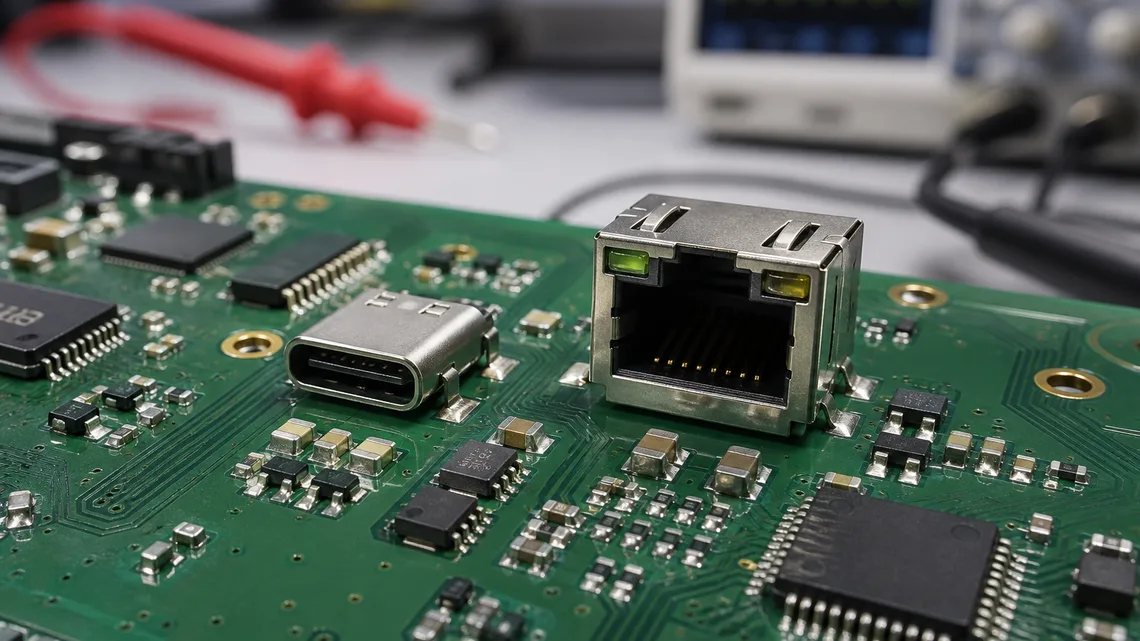
Connectors, terminals, sockets, cable assemblies and test points provide electrical connections while influencing contact resistance, current capacity, signal integrity, mating life, ingress protection and assembly reliability. USB, board-to-board, wire-to-board, RF and automotive connectors all perform a connecting function, but their electrical and mechanical requirements differ considerably.
Switches, buttons, relays, contactors, buzzers, motors and fans connect electrical signals to mechanical action. Relay selection includes coil voltage, contact arrangement, load type, contact rating, insulation spacing, life and drive method. Motors and fans require consideration of speed, torque, noise, efficiency, starting current and control interface.
Sensors, optoelectronics and frequency-control components
Sensors convert temperature, pressure, position, speed, light, magnetic field, humidity, gas concentration or acceleration into electrical information. Thermistors, photoresistors and Hall elements may serve as basic sensing elements, while integrated sensors can include amplification, compensation, data conversion and a digital interface. Range, accuracy, response time, drift, mounting, environment and calibration define suitability.
LEDs, photodiodes, phototransistors, optocouplers and displays emit, detect, isolate or present information using light. Crystals and ceramic resonators provide frequency references, while an oscillator usually combines a resonator with active circuitry. Frequency tolerance, load capacitance, jitter, phase noise, startup time and temperature stability can affect timing and communication systems.
Power devices and functional modules
Bridge rectifiers, power modules, DC-DC converters, AC-DC supplies, gate drivers and battery-management devices participate in power conversion and control. Modules can shorten development time, but input and output range, efficiency, ripple, transient response, isolation, thermal design, protection functions and approvals still need verification.
Wireless, positioning, display, communication and sensor modules integrate ICs, passive components, RF structures, firmware or standard interfaces. A module is not a selection-free black box. Antenna layout, supply quality, protocol compatibility, software support, certification and long-term availability remain project concerns.
Five questions for an unfamiliar component
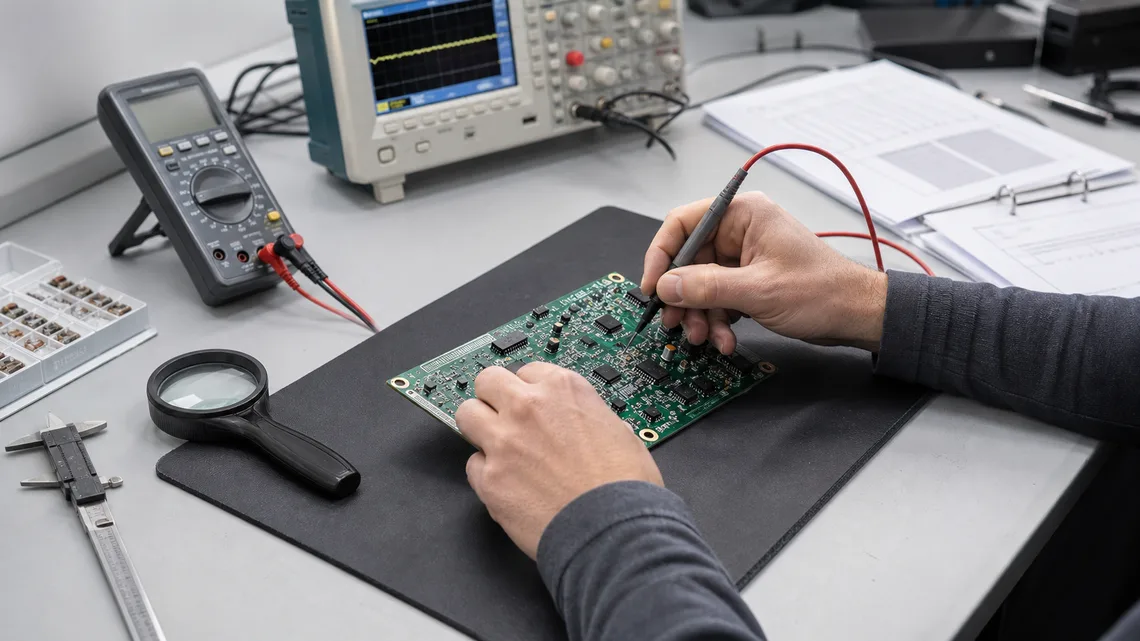
- What does it do in the circuit? Is it part of the power path, signal chain, filter, connection, sensing function or protection network?
- What are the operating conditions? Include voltage, current, frequency, temperature, transient exposure, environment and expected life.
- Which values require test conditions? Clamp voltage, capacitance, loss, impedance and surge ratings are often meaningful only with their stated conditions.
- Are package and assembly details compatible? Similar dimensions do not guarantee the same pads, pinout, polarity, thermal path or process requirements.
- What validation is required? Datasheet screening may need to be followed by simulation, sample testing, EMC testing, environmental testing or final-system verification.
Why a component classification map is useful
There is no single electronic-component classification system that is mutually exclusive in every context. Classification by material, structure, function, integration or application produces different but useful views. The goal is not to force every part into one box; it is to find the correct documentation, comparison conditions and validation path more quickly.
A practical first map is simple: passive components dissipate, store, filter and couple; semiconductors and ICs rectify, switch, amplify, compute and control; protection components manage overvoltage, overcurrent, overtemperature and ESD risks; connectors, sensors, optoelectronics and modules connect the circuit to the outside world.
For a specific part or project, prepare the operating voltage, current or signal frequency, package, temperature, surge or ESD conditions, and the required qualification or test standard. Continue with the Component Center, Technical Wiki and Applications, or send a private requirement through Contact UBAEC.





useful