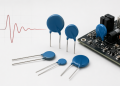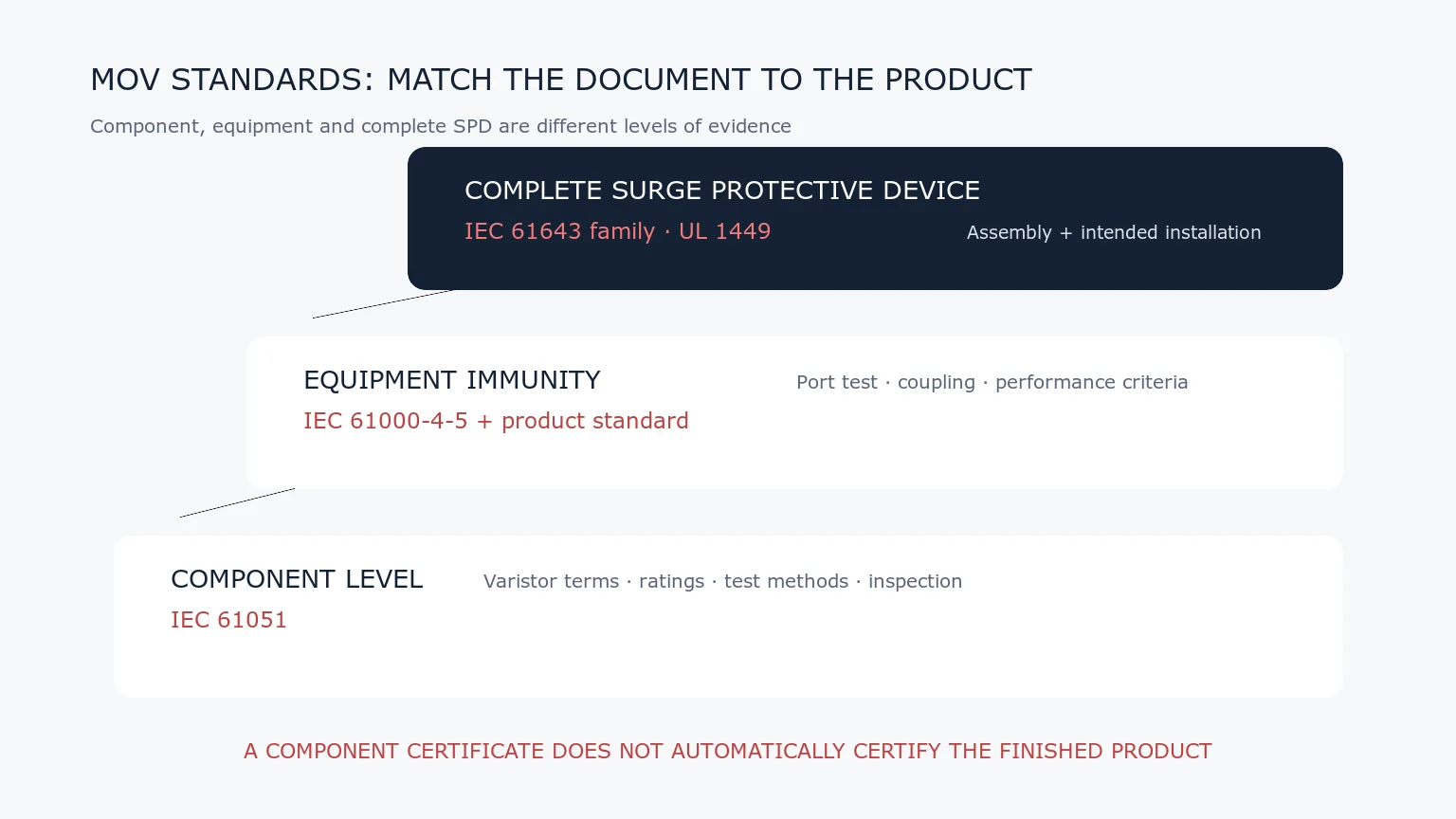
“Compliant MOV” can mean very different things depending on whether the subject is a component, a complete piece of equipment or a surge protective device (SPD). IEC 61051, IEC 61000-4-5, the IEC 61643 family and UL 1449 do not have interchangeable scopes.
This guide explains how to separate component characterization, equipment immunity and finished-SPD certification. It is a scope map rather than a substitute for the current standard, product-family requirements or a certification body’s decision.

IEC 61051: The Varistor Component Level
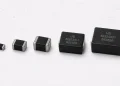
IEC 61051-1 is a generic specification for varistors with symmetrical voltage-current characteristics. It establishes terms, inspection procedures and test methods used for varistor components. The current edition includes provisions relevant to leaded and surface-mount varistors.
Component-level subjects include parameters and tests such as:
- varistor voltage at a defined current;
- leakage current and insulation behavior;
- clamping voltage at a defined pulse current;
- maximum peak current and rated energy;
- capacitance and environmental endurance;
- terminal strength, soldering and surface-mount requirements;
- electrostatic-discharge-related tests for relevant devices.
Passing a component specification supports consistent part qualification. It does not by itself prove that a power strip, industrial controller or appliance meets its complete surge or safety requirements.
IEC 61000-4-5: Equipment Surge Immunity
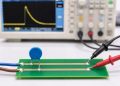
IEC 61000-4-5 is an EMC test method applied to equipment ports. It defines the surge generator, coupling methods, setups and procedures. The applicable product standard determines the required level and performance criterion.
The MOV is one element in the equipment’s protection path. Wiring impedance, filters, grounding, gas discharge tubes, transient-voltage-suppression diodes and the protected load all affect the measured result. Therefore an IEC 61000-4-5 pass is an equipment result, not an independent approval printed onto any MOV that happened to be installed.
IEC 61643: Complete Low-Voltage SPDs
The IEC 61643 family addresses surge protective devices. IEC 61643-01:2024 provides general requirements and test methods for low-voltage SPDs connected to systems up to 1,000 V AC or 1,500 V DC. IEC 61643-11:2025 applies to SPDs connected to AC low-voltage power systems up to 1,000 V RMS.
An SPD contains one or more nonlinear elements, which may include MOVs, but the standard evaluates the complete device. Depending on product type and application, the assessment can include voltage protection level, nominal and maximum discharge current, temporary-overvoltage behavior, disconnection, short-circuit behavior, thermal stability, mechanical construction and marking.
UL 1449: SPDs for North American Applications
UL 1449 is a Standard for Surge Protective Devices. Its scope covers enclosed and open-type SPDs intended for repeated limiting of transient voltage surges on specified power circuits, including defined SPD types and installation positions.
UL 1449 applies to the SPD assembly and its intended use, not merely to an unprotected MOV element. A listed or recognized component may help a product certification program, but it does not automatically make the final assembly UL Listed.
Component Recognition vs Product Listing
A component recognition or test report normally applies to a specific manufacturer, series, construction, rating range and conditions of acceptability. Product listing evaluates a finished product category against the applicable requirements.
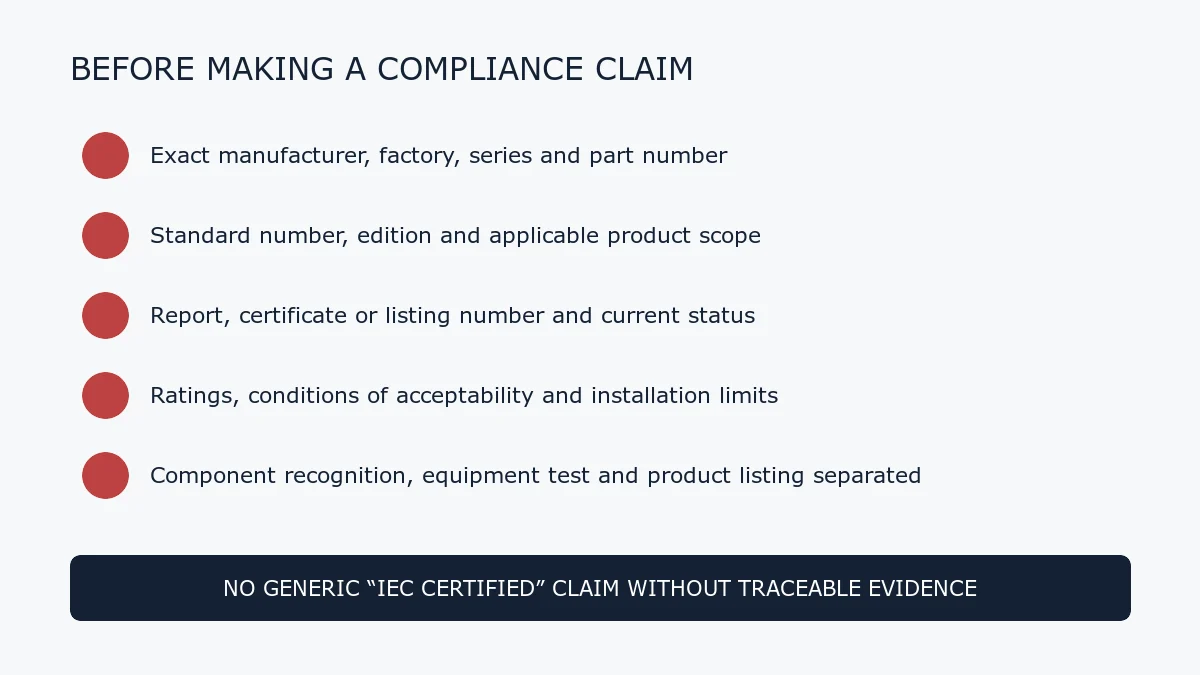
Before repeating a compliance statement, confirm:
- the exact legal manufacturer and factory where relevant;
- the series and part numbers covered;
- the standard edition and report or certificate number;
- whether the evidence is a test report, component recognition, conformity certificate or product listing;
- the voltage, current, temperature and installation limitations;
- whether surveillance or periodic follow-up is required;
- whether the certificate remains active.
Why the Same MOV Can Produce Different Compliance Results
The host design controls normal voltage, prospective fault current, surge-current sharing, thermal environment, enclosure behavior and protective coordination. A suitable MOV in one circuit may be unsafe or ineffective in another.
Changes to PCB spacing, fuse type, enclosure, lead length or thermal coupling can also affect a finished product. Certification programs therefore define which construction changes require engineering review or retesting.
A Practical Standards Map
| Question | Typical reference | What it does not prove alone |
|---|---|---|
| How is the varistor component characterized? | IEC 61051 family and manufacturer specification | Finished equipment immunity or SPD certification |
| Can equipment tolerate a defined surge test? | IEC 61000-4-5 plus the applicable product standard | Universal MOV suitability for other circuits |
| Does a complete low-voltage SPD meet IEC requirements? | IEC 61643 family | Compliance of unrelated host equipment |
| Does an SPD meet the applicable UL construction and test requirements? | UL 1449 | Automatic listing of an assembly built from individual recognized parts |
Common Claiming Errors
- Writing “IEC certified” without naming the standard, edition, product and evidence.
- Using an MOV component certificate as proof for a finished SPD.
- Calling an IEC 61000-4-5 laboratory pass a component approval.
- Copying a certificate from a similar series or a different factory.
- Using an expired, withdrawn or superseded document without checking status.
- Assuming RoHS or REACH documentation is an electrical-safety approval.
- Displaying a certification mark without the right authorization and marking rules.
Documentation Checklist for Sourcing and Design
- Define the target market and finished-product category.
- List the applicable component, EMC, safety and SPD standards separately.
- Obtain current manufacturer datasheets and controlled drawings.
- Request traceable certificates or reports for the exact series.
- Check certification databases where applicable.
- Record all conditions of acceptability and derating rules.
- Validate the complete circuit under normal, surge and abnormal-voltage conditions.
- Control approved materials, factories and part-number substitutions.
Frequently Asked Questions
If an MOV is UL Recognized, is my product UL Listed?
No. Component recognition can support a product evaluation, but the finished product must meet the applicable construction, application and test requirements.
Is IEC 61000-4-5 a safety certification?
It is primarily an EMC immunity test method. The complete product may also be subject to separate safety standards and abnormal-operation tests.
Are IEC 61643 and UL 1449 identical?
No. They address related SPD functions but have their own scopes, classifications, test details and certification systems. Use the standard required by the target market and product category.
Related UBAEC Guides
- IEC 61000-4-5 Surge Test Explained
- MOV Surge Waveforms
- MOV Failure Modes and Thermal Protection
- How to Select an MOV
Official References
- IEC 61051-1:2018 — Varistors for use in electronic equipment
- IEC 61000-4-5:2014 — Surge immunity test
- IEC 61643-01:2024 — General requirements and test methods for low-voltage SPDs
- IEC 61643-11:2025 — SPDs connected to AC low-voltage power systems
- UL 1449, Edition 5 — Surge Protective Devices
For a document-scope or application review, send the exact part number, target market, product category and available certificate through Ask UBAEC.