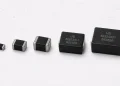
Why Can a GDT Keep Conducting After a Surge?
A gas discharge tube (GDT) can finish diverting the specified surge and still remain conductive. Once the tube has fired ...

A gas discharge tube (GDT) can finish diverting the specified surge and still remain conductive. Once the tube has fired ...

Why can one gas discharge tube (GDT) have a DC sparkover voltage and a substantially higher impulse sparkover voltage? The ...
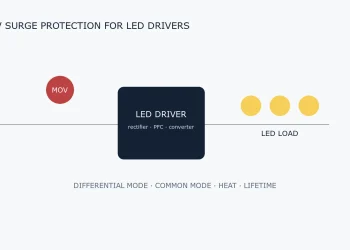
LED lighting combines long expected service life with exposure to switching transients, long outdoor cables and lightning-induced surges. An MOV ...

Understand how MOV clamping voltage is specified, why test current and waveform matter, and how wiring inductance changes the voltage ...

Follow a condition-based workflow from circuit voltage and transient source to MLV screening, layout, evidence review and final system validation.

Select an MOV by continuous voltage, surge waveform, clamping limit, pulse endurance, temperature, package and safety coordination.
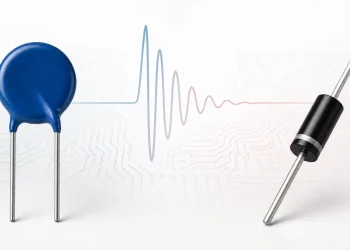
Compare MOVs and TVS diodes by operating voltage, clamping behavior, surge capability, capacitance, aging and circuit position.

Learn how through-hole metal-oxide varistors work, how disc size and voltage codes are interpreted, and how to select one for ...
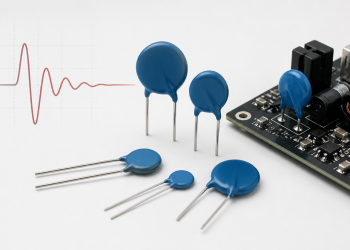
Learn how metal-oxide varistors work, how to read MOV voltage, clamping voltage, surge-current and energy ratings, and what to check ...