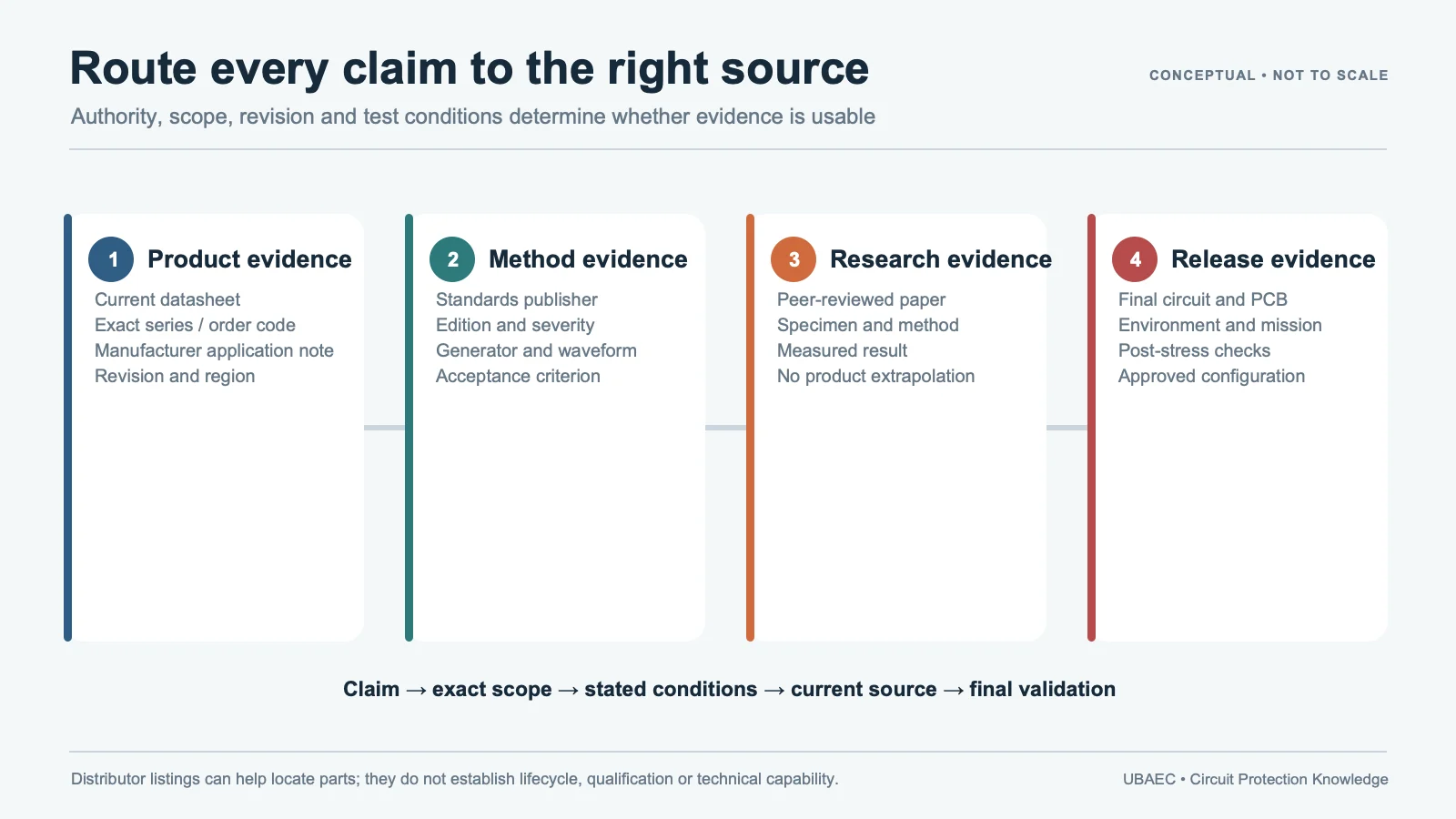
This MLV FAQ gives short, condition-aware answers to recurring engineering and sourcing questions. It is a routing page rather than a substitute for the linked selection, parameter, reliability and application guides.
When a question involves a voltage, current, capacitance, pulse or qualification, keep the exact series, order code and test method with the answer. A generic category statement cannot release a component or final circuit.
What does MLV mean?
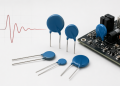
MLV means multilayer varistor: a nonlinear ceramic protection component with internal electrodes. The name identifies a construction class, not one voltage, capacitance, surge rating or qualification. Start with the MLV Knowledge Map for the stable overview.
Are all chip or SMD varistors MLVs?
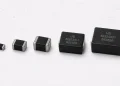
No. Chip and SMD describe form or mounting and may include multilayer ceramic, molded MOV or other constructions. Confirm the datasheet construction using the MLV terminology guide.
Are VDC, Vvar and Vc the same?
No. VDC/VAC are continuous operating limits; Vvar is a reference voltage at a stated low current; Vc is measured at a stated transient current and waveform. Use the parameter and test-condition guide.
Can I compare two clamping-voltage values directly?
Only when current, waveform, polarity, temperature and measurement basis match. A lower Vc tested at a lower current is not automatically better.
Are 8/20 µs and 10/1000 µs ratings interchangeable?
No. Pulse shape/duration, source impedance, energy and repetition differ. ESD, load dump and installation surge are also separate evidence classes.
Why does MLV capacitance matter?
Capacitance can load or filter a signal. Compare it at matched frequency, amplitude/bias, temperature and typical/maximum basis. High-speed interfaces require signal-integrity validation.
Does an MLV have polarity?
A standard two-terminal MLV is bidirectional and normally has no polarity. Arrays or integrated filter structures still require the exact pinout/topology.
Does AEC-Q200 mean the part suits every automotive circuit?
No. It is passive-component qualification tied to a declared revision and part scope. It is not module EMC immunity, load-dump capability, lifetime guarantee or vehicle compliance.
Can an MLV guarantee IEC 61000-4-2 compliance?
No. IEC 61000-4-2 is an equipment ESD test. The result depends on the selected part, PCB path, grounding, coupling, protected circuit and acceptance criteria. Test the final equipment.
Can I replace a disc MOV with a small MLV?
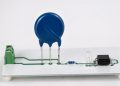
Not generically. Construction, continuous voltage, pulse/energy, safety and failure-management roles differ. Only exact matched evidence and full system coordination can support a replacement.
Can two MLVs with the same package and Vvar be substitutes?
Not automatically. Compare VDC/VAC, Vvar test current/tolerance, Vc conditions, Imax/energy waveform, capacitance, leakage, temperature, termination, qualification, lifecycle and layout. Follow How to Select an MLV.
Can an MLV fail short or open?
Either is possible, along with resistive leakage or intermittent behavior, depending on stress, construction, mounting and available current. Named open-mode/failsafe products remain exact-product claims. See MLV reliability and failure modes.
How important is PCB placement?
Very. Long traces and return loops add inductive voltage and can bypass the intended protection path. Mechanical layout also affects ceramic cracking. Use the MLV layout and soldering guide.
Where can I find manufacturer datasheets?
Use the MLV Technical Resources & Datasheet Library and the official manufacturer or publisher references below. Verify the exact order code, revision, lifecycle and test conditions before use; a family page or distributor listing is not the controlling technical source.
How do I choose between an MLV, TVS diode and polymer ESD suppressor?
Start with the protected node and final acceptance limits. Compare exact working voltage, dynamic clamp, capacitance and leakage, pulse endurance, temperature, layout, qualification, lifecycle and failure response under matched conditions. No technology is the universal winner. Use the MLV versus TVS diode guide and the MLV versus polymer suppressor guide.
How much working-voltage margin does an MLV need?
There is no universal percentage. Establish the highest continuous voltage across tolerance, charging, ripple, temperature, operating state and credible fault conditions, then compare it with the exact part’s DC or AC working-voltage rating and leakage behavior. Keep that decision separate from Vvar and transient Vc.
How do I approve an alternate MLV?
Verify construction, topology, package, termination, continuous voltage, Vvar test current and tolerance, Vc conditions, pulse waveform and repetition, capacitance basis, leakage, temperature, qualification, lifecycle and land pattern. Record every mismatch and repeat the necessary final-circuit tests using the MLV cross-reference method.
What information is needed for a technical inquiry?
Provide circuit/interface, normal and maximum voltage, transient source/waveform and repetition, protected-device limit, clamp target, capacitance/leakage limit, package, temperature, qualification, existing part number and expected quantity. Use Ask UBAEC for a private requirement discussion.
Return to the MLV Knowledge Map for the full topic structure.
Continue Reading
- MLV Datasheet Parameters and Test Conditions
- How to Select an MLV: A Practical Engineering Workflow
- MLV Reliability, Standards and Failure Modes
- MLV Knowledge Map
Official Technical References
The following first-party, standards-organization or publisher records support the technical boundaries used in this article. Always verify the current revision and the exact product scope before design release.
- Multilayer Varistors technology and product overview
- Basics of chip varistors and comparison with other protection devices
- MOVS surface-mount metal oxide varistors product page
- VP Plastic Encapsulated 85°C Surface Mount Varistors
- ZVE Series Suppression Varistors datasheet
- TransGuard multilayer ceramic transient voltage suppressors datasheet
- IEC 61000-4-2:2025 – Electromagnetic compatibility (EMC) – Part 4-2: Testing and measurement techniques – Electrostatic discharge immunity test
- AEC-Q200 Rev E – Stress Test Qualification for Passive Components
- Degradation of potential barriers in ZnO-based chip varistors due to electrostatic discharge
- Multilayer varistors (MLVs) High-speed series datasheet